Why Fit People Get Sick and What Actually Heals You with Paul Chek
Mar 09, 2026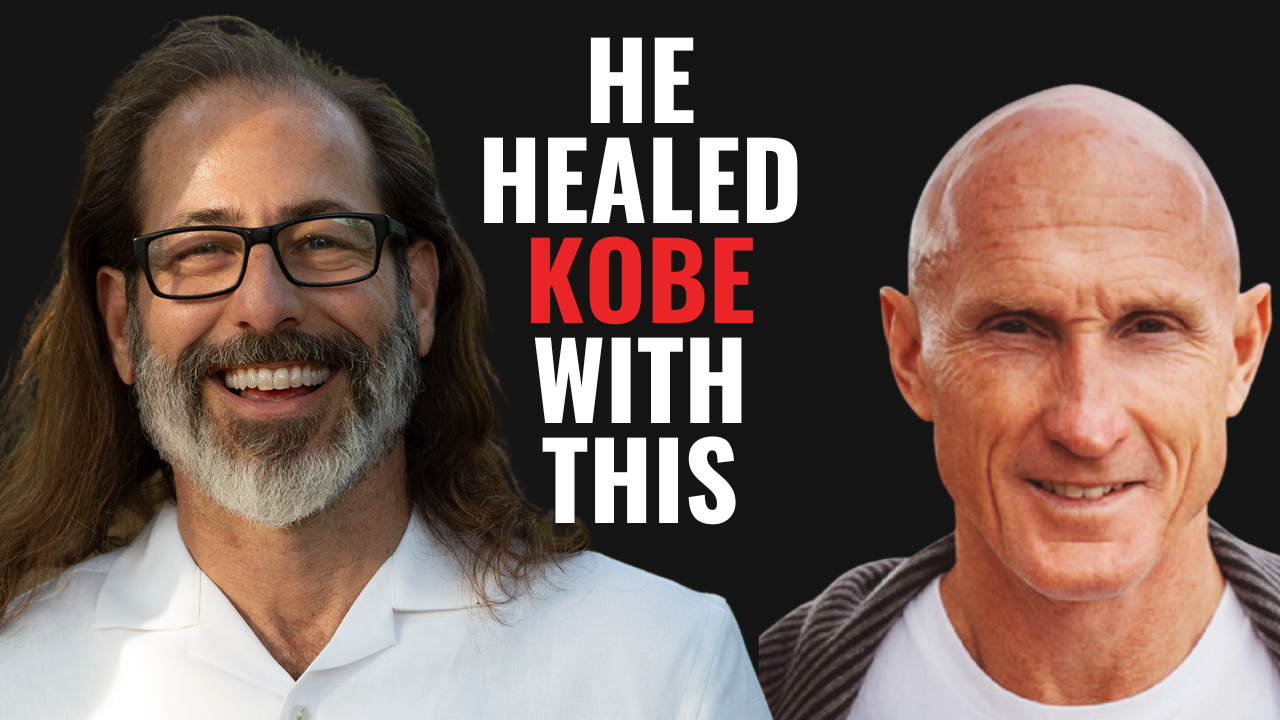
Links
Join the C.H.E.K academy and become an integrated health coach: https://academy.chekinstitute.com/academy-landing-page
Get the full scope of Paul Chek’s mission to optimize the inner workings of human beings: https://paulchek.com/
Timestamps
00:00:00 - Paul’s relentless quest to uncover the psycho-spiritual root of disease mainstream medicine refuses to see
00:00:27 - How an Army boxing coach and elite triathlete broke free embraced natural healing
00:01:44 - The real reason men drop dead on the toilet Monday morning
00:10:02 - How a chronically overloaded nervous system quietly sets the stage for disease
00:14:25 - Why your self-image and core beliefs are shaping your biology in real time
00:23:21 - The uncompromising rule Paul uses to separate real healing from passive “treatment”
00:29:23 - The Totem Pole framework that exposes the true root cause behind chronic pain and illness
00:45:11 - Why Paul walked away from private practice
00:52:27 - Delve into Paul Chek’s decades of hard-won health wisdom
Transcript
Hello and welcome. I’m your host, Dr. Andrew Kaufman. Today’s guest is more than just a guest — I would call him a legend. Paul Chek has had a distinguished career as a boxer and triathlete for the Army, later evolving into a trainer and eventually a pioneer in integrative healing disciplines. He founded the Chek Institute, where he trains professionals to work with clients on health, athletic performance, personal philosophy, and psychological stress. Today we’ll explore his decades of experience and the models he’s developed along the way. Welcome, Paul.
It’s a pleasure to be here. I didn’t know about you until COVID, but when I found your work, I thought, finally — here’s a doctor willing to speak plainly and use common sense. I’ve shared your work with thousands of students. It’s good to have conversations like this because although we arrived at our perspectives through different life paths, our philosophies on health and healing are tightly aligned.
Recently, I heard you mention that several men died while having bowel movements, particularly on Monday mornings. There’s statistical evidence showing that heart attacks in men are most common on Monday mornings, which psychologists associate with work stress. Many people live disconnected from their hearts, doing what they’ve been programmed to do rather than what fulfills them.
I once worked with a highly fit Green Beret who had done multiple tours in Vietnam. He could still do forty chin-ups and looked indestructible. He didn’t show up to an appointment one day. I later learned he had died of a heart attack while having a bowel movement first thing Monday morning. I’ve known other executive-type men with similar stories.
If someone is constipated and performs a strong Valsalva maneuver, that creates significant pressure on the heart — similar to what happens in heavy lifting. I experienced this myself while training intensely; I developed tachycardia and bradycardia and was diagnosed with “weightlifter’s heart,” a hypertrophy of the left ventricle. When I shifted to more aerobic, circuit-style training, it resolved. The point is that chronic overload, whether physical or psychological, can deplete a person’s capacity to rebound.
Dr. Kaufman shared a case where a man had intense chest pain during a bowel movement but recovered afterward. He suggested that there may be an underlying cause — such as toxin accumulation — and then a trigger, like stress or straining. The crisis could represent the body attempting to heal, and if elimination succeeds, recovery may follow.
Paul added that the difference may lie in vitality. If someone has sufficient reserves, the body can mount a parasympathetic rebound after a sympathetic surge. If they’re depleted, the system may not recover. He emphasized that many fit individuals are “fit but sick” — using exercise compulsively while ignoring deeper emotional crises. Chronic sympathetic overload without recovery creates vulnerability.
They discussed the autonomic nervous system: the sympathetic “fight or flight” response and the parasympathetic “rest and digest” response. These systems are not simple on-off switches; they dynamically balance. When someone lacks internal resources, they cannot rebound from extreme stress swings.
The conversation shifted toward externalization — defining oneself by status, wealth, power, or physical performance. Paul described this as losing contact with the inner self or soul. When people chase external validation, they eventually meet what he calls the “pain teacher,” which forces them inward. Many illnesses, injuries, and crises serve as invitations to reconnect with deeper meaning.
When working with clients in pain, Paul begins by identifying their dream goal. He asks them to rate their commitment from zero to ten — zero being apathetic, ten being fully committed. If the heart doesn’t buy in at least a seven, progress stalls. If no dream emerges, he explores their nightmare — often financial crisis or fear — which drains their life force.
He emphasized that he does not treat diseases; he coaches people who have acquired disease. The Western “treatment” model fosters passivity. Coaching requires participation and responsibility. If clients don’t implement the prescribed changes, he does not advance the program. True healing demands engagement.
The discussion moved into Paul’s “Survival Reflex Totem Pole,” a hierarchy of control systems in the body. Pain often appears in what he calls “slave joints” — knees, shoulders, lower back — but the cause may originate higher in the system, such as the atlas, vision, vestibular function, or visceral imbalance. He recounted working with Kobe Bryant, who had chronic knee pain unresponsive to treatment. Paul identified an atlas misalignment, corrected it, and the knee pain disappeared immediately. The imbalance had been neurological, not local.
They noted that modern medicine’s compartmentalization often overlooks such hierarchical relationships. Paul stressed that perception of stress is physiologically real; the psyche sits at the top of the hierarchy. Many physical problems trace back to belief systems, trauma, and emotional patterns.
Over time, Paul shifted from primarily physical therapy to depth psychology and spiritual work. He studied Carl Jung and Rudolf Steiner and trained in plant medicine ceremonies, conducting over a thousand healing sessions. He found that beneath most illnesses lies a longing to feel loved, safe, valued, and seen. Addiction, in his definition, is any repeated behavior that does not produce the results one wants. He sees addiction as a misguided attempt to feel love or relief from pain.
Ultimately, he believes the deepest healing occurs when individuals reconnect with their inner source and recognize themselves as expressions of something sacred. When that shift happens, many naturally step into leadership or service roles.
Dr. Kaufman asked how people could learn more. Paul directed listeners to paulchek.com as the central hub for his work, including his Chek Academy training, Spirit Gym program, books, and podcast. He highlighted his book How to Eat, Move and Be Healthy, which synthesizes foundational lifestyle principles. He noted that most people can resolve their issues by implementing the basics properly.
They closed by reflecting on the responsibility of guiding others in a world increasingly disconnected from foundational principles. Paul remarked that today is the time to be a Chek professional — there are billions who need help.
Thank you for joining us. We’ll see you next time.
Stay connected with news and updates!
Join our mailing list to receive the latest news and updates from Dr. Andrew Kaufman.